Wednesday, July 22, 2015

Craft Beer Stand at the Lima Book Fair

I had a hard time at the book fair, I must say.

The fair is set up under a tent erected over the central part of park, covering a fountain and a number of steps.  The floor is thus of plywood sheets over a frame, and covered with carpeting, all of which makes in a bit uneven in many spots.  With my aching and sensitive knee, it made walking difficult, and even a bit perilous.   It was also very hot under the tent, and my off-gait was causing me to expend extra effort as it was.


Fortunately, there is a craft beer stand in the food court, set up and run by a small distributor representing four small breweries - three from Lima and one from Cusco.


I chose two beers to try.

First, I opted for the Ayrampo Roja from the Sacred Valley Brewery, whose beers I had never tried before.


The Ayrampo Roja (6% ABV, 35 IBU) is a red beer (hence the roja) coloured with caramel malt and the fruit of the ayrampo cactus, which is native to the Peruvian Andes and has long been used to color foods in the highlands.  The beer was good, and there was no ayrampo flavour (it can taste a bit like red beets).

Next, I went for one from the Cumbres brewery.  I have tried one other of Cumbres' beers, their Quinoa Kolsch, so I was anxioux to try another of their offerings.


I opted for the Maracumanto (6.2 % ABV).   Maracumanto is a Belgian Pale Ale, fermented with maracuuyá and aguaymanto  fruit.   I half expected it to be sour, owing to the presence of the maracuyá, but it was not sour at all.  It was actually very refreshing, and relatively low in fruit notes in the mouth, even though they came through in the nose.

Needless to say, I then felt quite refreshed!

Lima Book Fair

I hurt my knee last week so I've not done much.    It was just yesterday that I've started to go out to places other than relatives' homes, and my cousin's medical practice.

My big adventure for the day was to get dropped off at the Lima International Book Fair after lunch at Toti and Marina's.

Normally, I hit the book fair a couple of times and can easily spend a couple of hours there on each visit.  This time, however, owing to my knee issues, I zipped through only stopping at a handful of stands, most of which I had already decided on visiting anyway.  In fact, I only delved in depth into two of them --those of the Istituto de Estudios Peruanos and of the Instituto Frances de Estudios Andinos-- and I only bought books at IEP's.


Thursday, July 16, 2015

Tarata Street


Strolling through Miraflores last week, Liz and I stumbled across Tarata Street, which I had known about but had never visited.

Before 1992, Tarata was just a quiet Miraflores side street -much as it is today- but on the night of July 16, 1992 - 23 years ago today, in fact- a powerful Shining Path car bomb exploded there.

There were one or two reports at the time (which I cannot find now) that indicated that the carbomb was actually intended for the banks on the main avenue a block away, but the car collided with a pickup truck at the intersection where the monument now stands and was abandoned minutes before it exploded.  

Those reports were buried or swept aside by the horrendous toll: 183 homes, 400 businesses, and 63 automobiles were either damaged or destroyed, and 25 people were killed and another 155 wounded that night.

People connected with the Shining Path have a t various points corroborated those initial reports that the bomb was not targeted at the civilian population, that it was intended for the banks, that it was a mistake, that the charge was too large.  However, it is hard to see how that one short block would have made any difference given the size of the charge used.  The shockwave would have still travelled down the canyon formed by Tarata's buildings and blown in very window, showering residents with flying shards of glass and other debris.  Either way, it is of little comfort to those who were hurt or lost loved ones.


Saturday, July 11, 2015

Lunch at Ámaz restaurant

Last week, just before Liz headed back to the US, we took ourselves out for lunch in Miraflores.  Wanting something a bit special and something on the lighter side, Liz picked ámaZ as our spot. 


We found, by the way, that Monday afternoon is not a bad time to go out, as we were able to be seated immediately without having a reservation.

ámaZ offers appetizers, but also offers many of its dishes in half-portions, so we opted for sharing a mix of dishes.  We have both enjoyed ámaZ's fare in the past, so we knew that we would not be disappointed.  Additionally, we knew from the menu and the attention to detail that there would not be a problem accomodating Liz's dietary restrictions (no gluten).  As it turns out, at ámaZ no grain flours are used, and only a few of the dishes contain soy sauce or hoisin, so almost the entire menu was wide open to us!

Cebiche ámaZ - made with fish and bananas

Los maduros de Doña Eli - plantain cups, with onion and smoked pork relish.
These were so good that after ordering a half portion, we ordered this full portion as well.

Avispa juane - rice and pork, cooked in  bijao leaves

Seafood and vegetable sautee

Charapa hot peppers and cocona fruit salsa

Helado de cecina - ice cream flavored with smoked peccary meat, with a dark beer reduction, Maras salt, and a sapote granita

Jungle fruit sorbets - capirrosa (pink), cocona (yellow), and copoazu (white).
The copoazu sorbet was a revelation.  Being related to cacao, its sorbet did have a hint of chocolate flavour at the very end of each mouthful, but to get to it one had to traverse a mix of sweet, not-so-sweet, paint, and other oddly familiar -but none unpleasant- flavours.  It was weird, but good, and so much of both that one wanted just a bit more, and just a bit more...

It was a great last lunch together before our few weeks apart, and the fare being so flavourful but light, neither of us was too full to walk for a bit.

We headed toward Parque Kennedy, where we had some coffee at an outdoor cafe before heading home.


Friday, July 10, 2015

Labor Unions Rally and March


On July 3rd Peru's largest labor confederation, the General Confederation of Peruvian Workers (CGTP)  called for rallies and marches to push for an increase in wages, salaries, and pensions, and to show support for the communities of the Tambo Valley in southern Peru who have been resisting the attempts by the government and Southern Copper Corporation and Newmont Mining expand the Tia Maria copper mine.

A large part of the rural communities of the Tambo Valley residents fear the mine expansion will be detrimental to their health and to the local economy, polluting water supplies and damaging pastures.  They charge that the environmental impact assessment was haphazard and that the government rushed through its approval process with minimal review.

After protests turned ugly following a number of documented abuses committed by on-duty police as well as off-duty police hired by the company to quell protests, the government sent in troops and imposed a state of emergency on several southern provinces, limiting freedom of assembly and placing some communities under night-time curfews.

On July 9th several thousand people gathered in Lima's Plaza Dos de Mayo, a traditional spot for such events, in front of the CGTP offices.


Thursday, July 2, 2015

Lima Zoo - Parque de las Leyendas

Yesterday Liz and I ventured to the Parque de las Leyendas -the "Park of Legends"- which is, in fact, the Lima zoo.

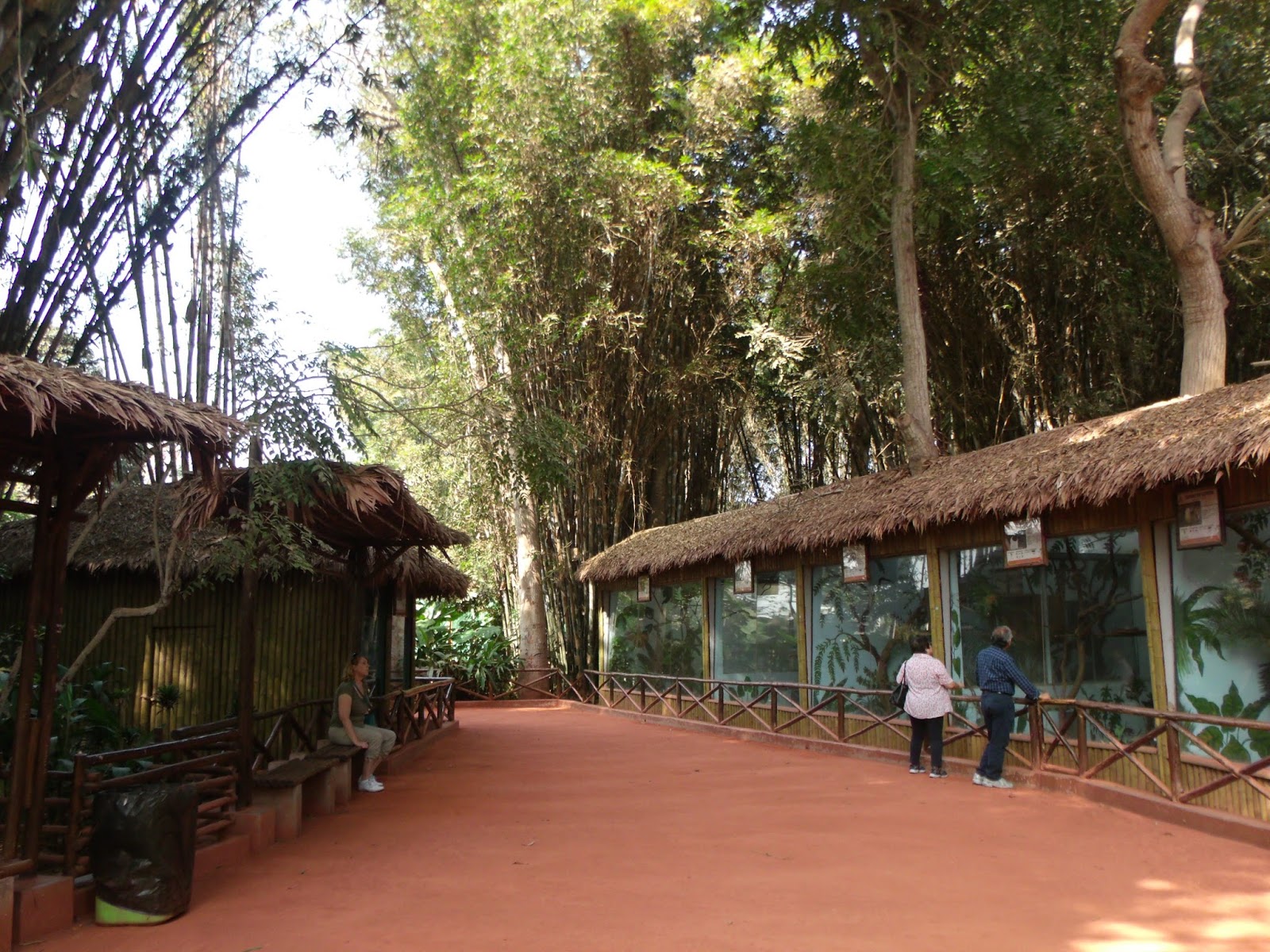
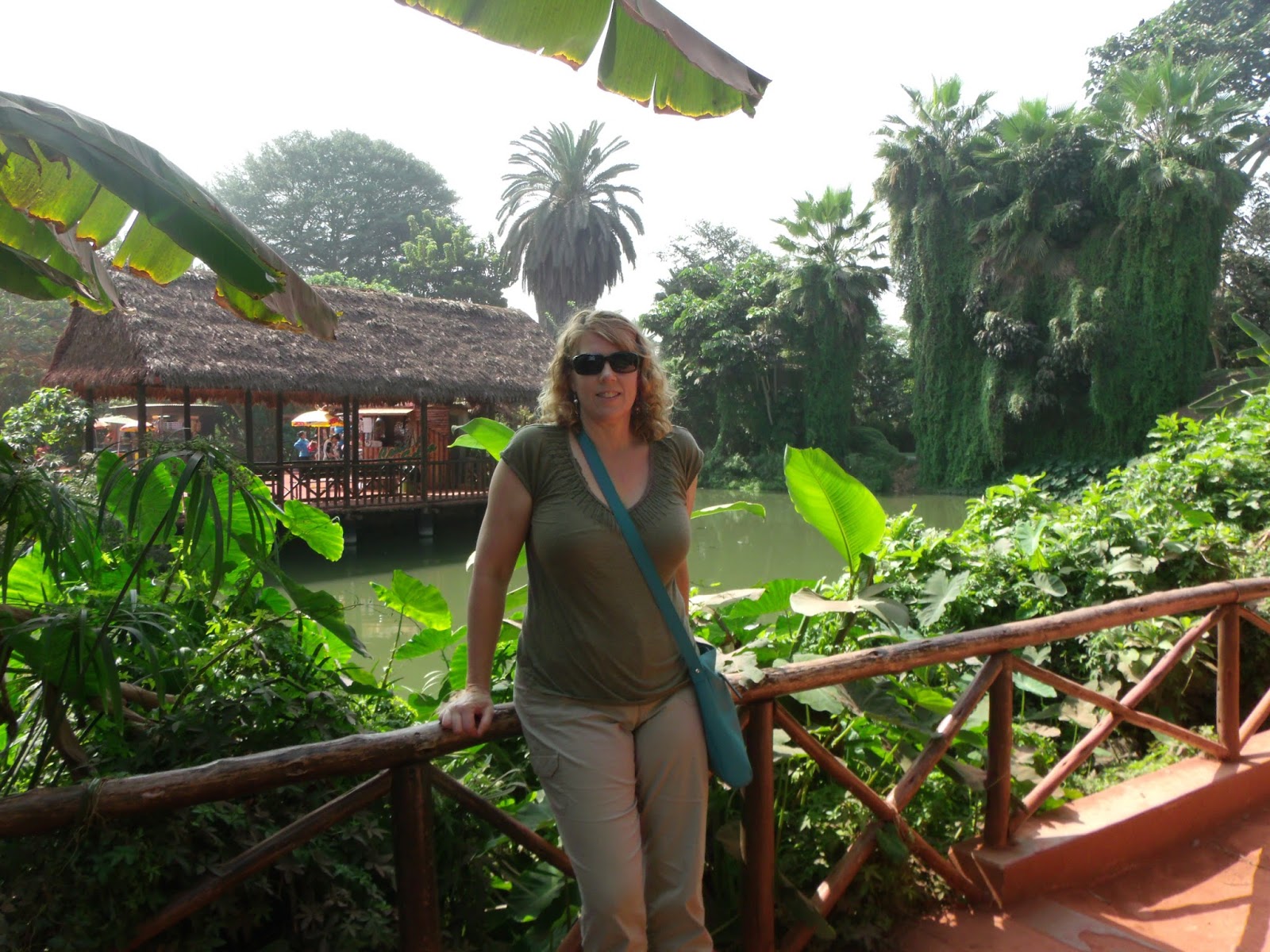
Built in 1964, the zoo was designed to showcase the fauna of Peru's three major natural regions: coast,  highlands, and jungle.  Of the three, the jungle section was, and still is, the centerpiece of the zoo.  Densly planted, it was designed to give visitors the impression of being in a jungle, and included a replica native village on an island.

Naturally, since I was a child it has been my favourite part of the zoo.


Red-bellied piranha ( Pygocentrus nattereri)
Male Andean cock-of-the-rock (Rupicola peruvianus), Peru's national bird.
White caiman (Caiman crocodylus).

Coatimundi (Nasua nasua)

Maquisapa or Pruvian spider monkey (Ateles chamek).

Huacari
Taricaya turtles (Podocnemis sp.)
Saki (Pithecia sp.,)

That part of the park has been significantly revamped in recent years, and its overall appearance has improved quite a bit.  We noticed that the animal population is much reduced, indicating that the zoo is not undertaking collecting from the wild to replace animals that have passed away.  In one sense that is a good thing, and is in line with modern zoo practices (which emphasize trading among zoos instead of wild colllection), but it also means that some animals are fated to live solitary lives in their enclosures, which for animals such as monkeys, otters, and capybaras could be quite stressful.  It also means that the zoo has no chance of establishing breeding populations of those animals

 Next to the jungle section, the Sierra or highlands portion of the park is the most developed in terms of giving a sense of place.  In the 1990s they built it up to resemble an Andean village, which is a nice touch.  The old replica mine has been preserved, and a favourite attraction in this section of the park (however, we skipped it this time).

Male Andean condor (Vultur gryphus)
A shot in which all four New World camelids can be appreciated.  From L to R: guanaco (Lama guanicoe),
vicuña (Vicugna vicugna), alpaca (Vicugna pacos), llama (Lama glama), and two more vicuñas.


 Another very distinctive feature of the park is that it emcompasses a significant portion of the ruins of what was once the ceremonial and administrative center of the precolumbian city of Maranga, with archaeological sites that date back 1,000 years or more, and go on up through the Inca occupation of the valley (in fact, most of what is visible today dates from the Inca period).

Huaca Tres Palos

Huaca La Cruz
15th century Ychma/Inca vase with an octopus motif
With ample water, treetops, and food supplies, the Parque de las Leyendas is also prime bird habitat, specially in the jungle section, which is just awash in the sounds of wild birds in the trees and bushes.

The huacas, or ruins, also serve an unexpected function as some of the few remaining habitats for native species of lizards and geckos. In fact, the whole of the park serves that purpose for other small animals including several snake, toad, and frog species.  When the zoo was founded it was surrounded by agricultural lands -someof which still received water via precolumbian canals!- and fallow fields.  As the area around it was urbanized those animals found refuge in the park.  In fact there is one species of llizard that is endemic to the park and to just two or three other huacas in the city.