Showing posts with label Zoo. Show all posts

Thursday, July 2, 2015

Lima Zoo - Parque de las Leyendas

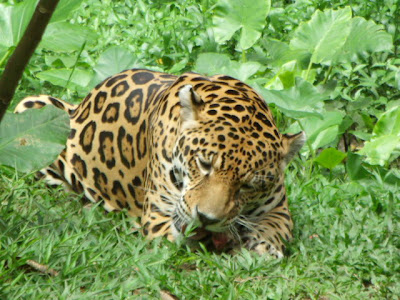
Yesterday Liz and I ventured to the Parque de las Leyendas -the "Park of Legends"- which is, in fact, the Lima zoo.

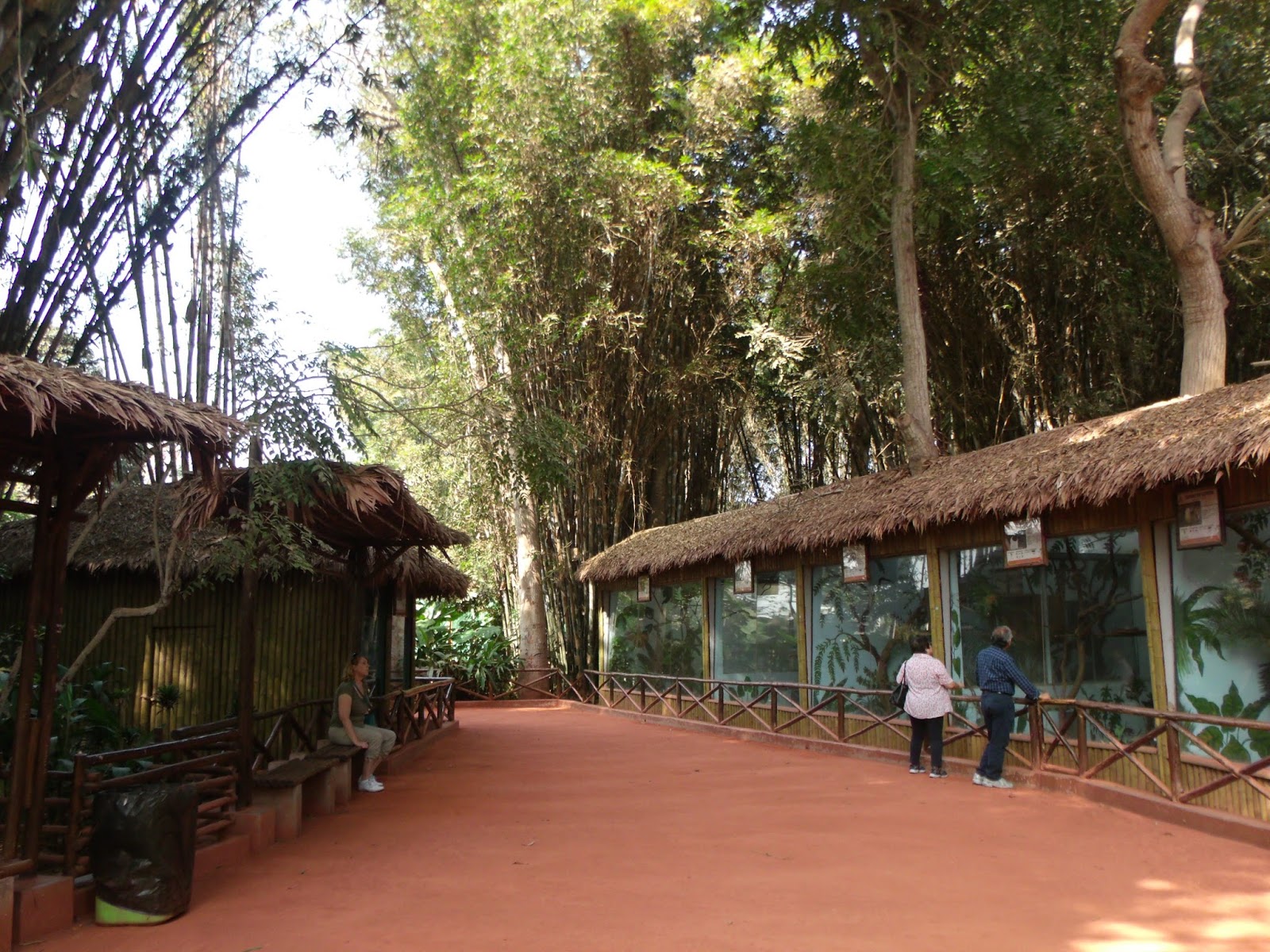
Built in 1964, the zoo was designed to showcase the fauna of Peru's three major natural regions: coast,  highlands, and jungle.  Of the three, the jungle section was, and still is, the centerpiece of the zoo.  Densly planted, it was designed to give visitors the impression of being in a jungle, and included a replica native village on an island.

Naturally, since I was a child it has been my favourite part of the zoo.


Red-bellied piranha ( Pygocentrus nattereri)
Male Andean cock-of-the-rock (Rupicola peruvianus), Peru's national bird.
White caiman (Caiman crocodylus).

Coatimundi (Nasua nasua)

Maquisapa or Pruvian spider monkey (Ateles chamek).

Huacari
Taricaya turtles (Podocnemis sp.)
Saki (Pithecia sp.,)

That part of the park has been significantly revamped in recent years, and its overall appearance has improved quite a bit.  We noticed that the animal population is much reduced, indicating that the zoo is not undertaking collecting from the wild to replace animals that have passed away.  In one sense that is a good thing, and is in line with modern zoo practices (which emphasize trading among zoos instead of wild colllection), but it also means that some animals are fated to live solitary lives in their enclosures, which for animals such as monkeys, otters, and capybaras could be quite stressful.  It also means that the zoo has no chance of establishing breeding populations of those animals

 Next to the jungle section, the Sierra or highlands portion of the park is the most developed in terms of giving a sense of place.  In the 1990s they built it up to resemble an Andean village, which is a nice touch.  The old replica mine has been preserved, and a favourite attraction in this section of the park (however, we skipped it this time).

Male Andean condor (Vultur gryphus)
A shot in which all four New World camelids can be appreciated.  From L to R: guanaco (Lama guanicoe),
vicuña (Vicugna vicugna), alpaca (Vicugna pacos), llama (Lama glama), and two more vicuñas.


 Another very distinctive feature of the park is that it emcompasses a significant portion of the ruins of what was once the ceremonial and administrative center of the precolumbian city of Maranga, with archaeological sites that date back 1,000 years or more, and go on up through the Inca occupation of the valley (in fact, most of what is visible today dates from the Inca period).

Huaca Tres Palos

Huaca La Cruz
15th century Ychma/Inca vase with an octopus motif
With ample water, treetops, and food supplies, the Parque de las Leyendas is also prime bird habitat, specially in the jungle section, which is just awash in the sounds of wild birds in the trees and bushes.

The huacas, or ruins, also serve an unexpected function as some of the few remaining habitats for native species of lizards and geckos. In fact, the whole of the park serves that purpose for other small animals including several snake, toad, and frog species.  When the zoo was founded it was surrounded by agricultural lands -someof which still received water via precolumbian canals!- and fallow fields.  As the area around it was urbanized those animals found refuge in the park.  In fact there is one species of llizard that is endemic to the park and to just two or three other huacas in the city.


Monday, July 9, 2012

Quistococha


On our last full day in Iquitos we ventured out to Quistococha lake.

Quistococha and its surrounding area are a designated protected natural area.   It's visitors' area includes a small zoo with animals from the region.


Lakeside, the visitors area also includes an artificial beach where where, after visiting the zoo, we were able enjoyably pass the afternoon lunching, lounging, and even traveling the lake in a rented boat.


Wednesday, July 4, 2012

Iquitos excursions

On our first full day in Iquitos (last Friday) we ventured to the port district of Nanay, at the eastern end of the city and near the mouth of the Nanay River, in order to contract a boat tour of the area's tourist amenities.


We hired a boat and headed out for our excursion on up the Nanay River.  Our rough itinerary was to visit a Bora native "village", the Butterfly Farm, the serpentarium, the confluence of the Nanay and Amazon rivers, and to see grey river dolphins.   We probably should have spotted a red flag when the guide told us that he wouldn't be taking us to  the serpentarium that my cousin mentioned but to a "new one".

Anyway, the excursion was a mixed success, but enjoyable nonetheless.

The Boras

Our first stop was a ways up the Momón River, a tributary of the Nanay, at a Bora native "village". 

After walking in from the river bank we arrived at a clearing dominated by an impressive Bora-style hut.  In its shade were several men and women, as well as some children, dressed in short barkcloth skirts and wearing feather headresses and seed necklaces.  These latter they promptly put on our heads, and invited us to sit down, whereupon young girls promply appeared with small pots of a black paint, with which they drew lines on our cheeks.

The head man explained that they were members of the Bora tribe and that they would teach us about their culture and perform five dances for us.   He also revealed that the cost per person would be 20 soles -which would make that stop alone as expensive as the boat we had hired.

While he waited for the rest of his crew to arrive from somewhere beyond the bushes and trees, we found out that the actual Bora villages are two hours further up the river.

When the rest of the group assembled -a collection of bored-looking middle-aged women, one missing an eye, and young women who clearly felt there were better ways to spend a holiday and party weekend than dancing in a circle with their shirts off for a handful of tourists- they launched into the dances, accompanied by their singing and the men's rythmic thumping of the ground with wood staves.  There was no explanation of the context of the dances nor the meaning of the words.

Then, as soon as they were done, the women rushed to us and started tying beadwork and snakeskin bands on our arms and putting necklaces around our necks.  When we refused to buy them, and gave them back, more than a few got testy and One-Eye came up to collect the 20 sol per head fee.  It was clear that our time there was done and that we'd received all the "teaching about our culture" we were going to get.


Animal Refuge

Our next stop was rather more interesting and definitely a more positive experience.  It was at the Amazonas Sueño del Momón animal rescue center and zoo.   The center takes in animals confiscated from the animal trade and rehabilitates them and releases them far from human settlements.

The zoo itself -set up on stilts due to occasional river flooding, as had actually happened a few weeks ago (parts of Iquitos still had drifts of silt in the streets)- was on the small side, and focused on smaller animals, but still was a fun place to visit, and a chance to get up-close-and-personal with a few of the animals.
Ocelot
Three-toed sloth
Anaconda


 Margay


Monkey place

We decied to skip the butterfly farm, so our final stop was at a place our guide described as a monkey-rearing facility but in fact was the farm of a friend of his who'd turned it into a sort of very mini zoo, with a couple of three-toed sloths, a 15ft anaconda, a mata mata turtle, a fawn, and some monkeys as the whole complement of animals.  For another 20 soles wed be treated to vaguely described tour of the place, which turned out to amount to nothing more than a circle through the field with stops at each small cage.  Frankly, we all felt a bit ripped-off for the second time that day.

However, it was a bit made up for by the antics of the free-roaming monkeys that were there.  The marmosets were shy and hyperactive, but there were a pair of woolly monkeys that were not shy at all, and a cute-as-can-be baby howler monkey that really wanted us to hold him, and he kept grabbing onto Nico and Rafa's feet and bare legs, much to their consternation.
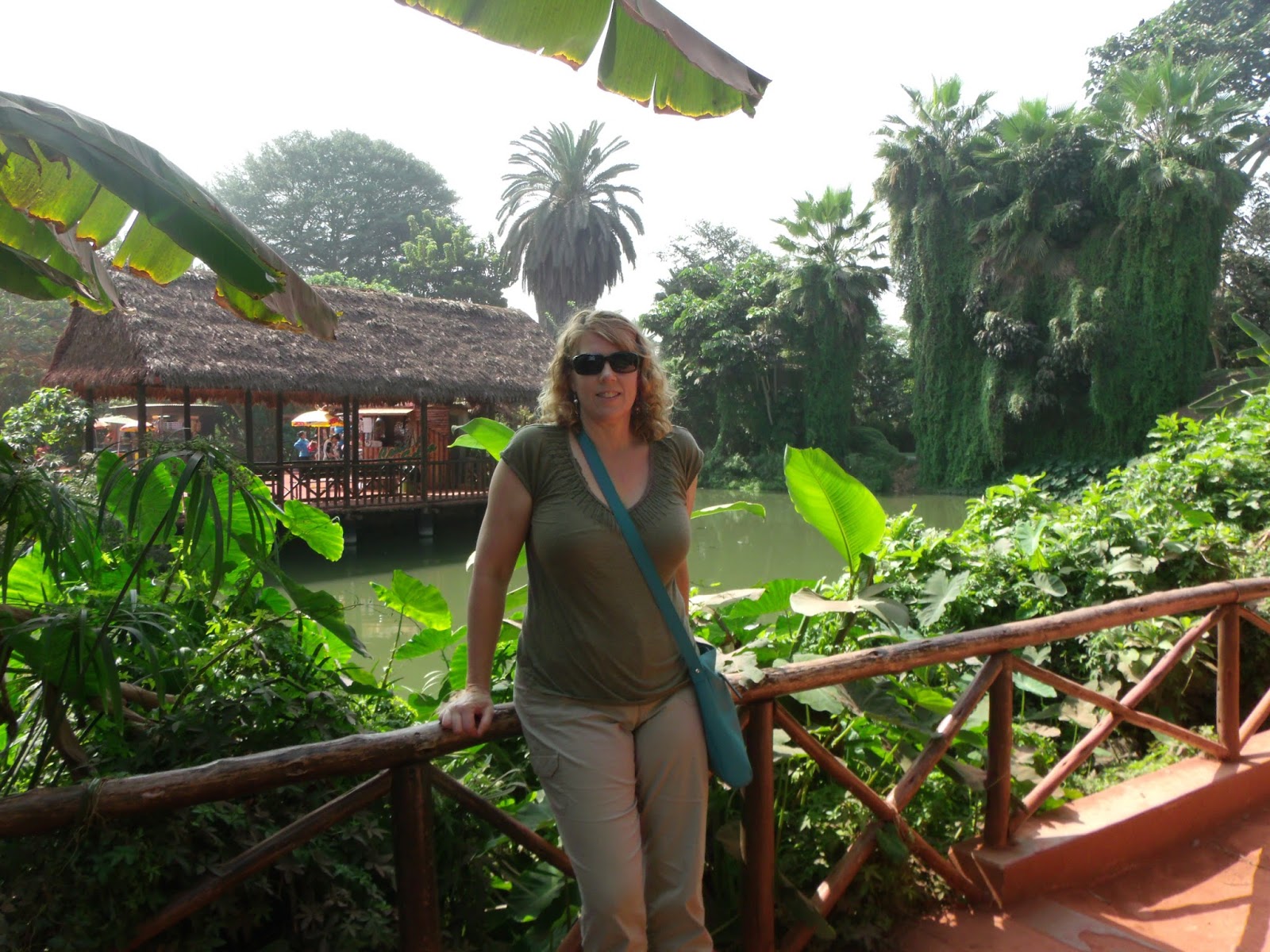
One of the larger woolly monkeys climbed up my arm when I offered it, and swung from it by his tail for a few seconds before climbing up to my shoulder, grabbing be about the head, and going nuts rubbing his lips on my moustache.  It was a bit disconcerting, let me tell you.

Fortunately after I pried him off, he decided it would instead be fun to pester one of the sloths for a while, before settling down in a chair to suck on his own penis for a bit.


Confluence of the waters

One of the things that we did get to experience -and not for 20 soles- was visiting the zone where the dark, tannic waters of the Nanay River meet the brown, silt-laden waters of the Amazon, and flow side by side in distinct bands before mingling.


I'd, of course, heard of such a thing and seen photos of it, but it was rather neat to witness it firsthand and close up.